|
Sandra
Lerner
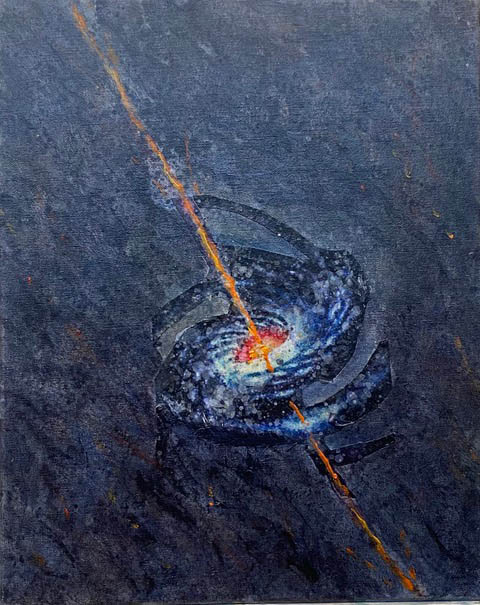
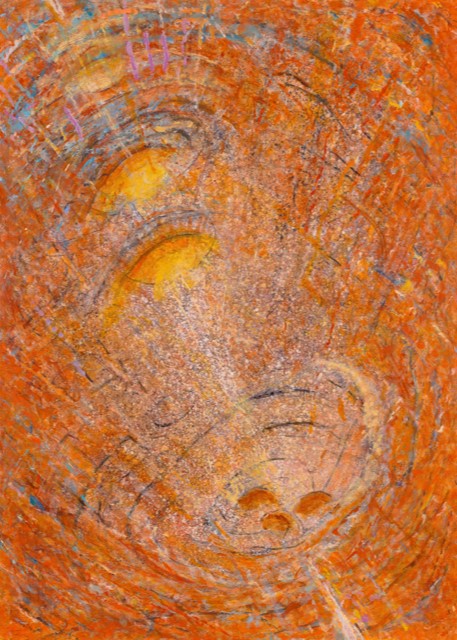
Macrocosm XII,
2019
Oil and mixed media on canvas
66 x 44 inches
|
Born New York City
Lived and worked in New York City and Sherman, CT
Died November 28, 2025 |
Education |
|
1981 |
Studied calligraphy and philosophy with Soshi Kampo Harada at
Kampo Kaikan, Kyoto and Sumera, Japan |
|
1978 |
BA, Hofstra
University, Hempstead, NY |
|
1966-68 |
Pratt Graphic Center,
New York
Studied painting with Jerry Okimoto (1973-1977), Leo Manso (1965-1972),
and
with Harry Sternberg (1960-1964) |
Solo Exhibitions |
|
2026 |
Sandra Lerner: A
Memorial Exhibition, June Kelly Gallery, New York |
|
2023 |
Entanglement,
New Paintings, June Kelly Gallery, New York |
|
2019 |
Cosmic Sublime: New
Paintings, essay by Donald Kuspit, June Kelly Gallery, New
York; catalogue |
|
2017 |
Creative Flux,
Gutman Gallery, Harvard Graduate School of Education, Harvard
University, Cambridge, MA |
|
2015 |
A Journey: New
Paintings, essay by Donald Kuspit, June Kelly Gallery, New York
Recent Paintings, Mandeville Gallery, Sherman Library, Sherman,
CT |
|
2012 |
Expanding Universes,
Ober Gallery, Kent, CT |
|
2010 |
Parallel Universes,
essay by Phyllis Braff, June Kelly Gallery, New York |
|
2005 |
Mystic Realms,
Washington Art Association Gallery, Washington, CT |
|
2004 |
Mystic Realms,
June Kelly Gallery, New York; catalogue |
|
2002 |
Paintings, The
Gallery at White Silo Farm, Sherman, CT |
|
1999 |
Empty and Full, June Kelly Gallery, New York
Mountains and Mists, Kimberly Greer Gallery, Northport, CT |
|
1997 |
Light Reflections, Washington Art Association, Washington Depot, CT |
|
1996 |
Particle Physics, June Kelly Gallery, New York |
|
1993 |
Kampo Museum, Kyoto, Japan |
|
1992 |
Mist Series,
essay by Donald Kuspit, June Kelly Gallery, New York; catalogue |
|
1991 |
Kauffman Gallery, Houston, TX |
|
1990 |
The Sensibility of Transcendence, June Kelly Gallery, New York |
|
1989 |
Dubins Gallery, Los
Angeles, CA
Pace University, Peter Fingesten Gallery of Fine Arts, New York |
|
1986 |
Kauffman Gallery, Houston, TX
Dubins Gallery, Los Angeles, CA |
|
1984 |
Kampo Museum, Kyoto, Japan
Gallery Don, Fukuoka, Japan
Kauffman Gallery, Houston, TX |
|
1983 |
Elaine Benson Gallery, Bridgehampton, NY |
|
1982 |
Inland Sea Series, Betty Parsons Gallery, New York; catalogue
Burnside Gallery, Greenport, NY |
|
1979 |
Elaine Benson Gallery, Bridgehampton, NY |
|
1978 |
Louise Himelfarb Gallery, Watermill, NY |
|
1977 |
SoHo Center for Visual Artists, New York
Central Hall Gallery, Port Washington, NY |
|
1976 |
Five Year
Retrospective, Nassau County Museum of Fine Arts, Roslyn, NY |
|
1975 |
Pleiades Gallery, New York |
|
1974 |
Central Hall Gallery, Port Washington, NY |
|
1969 |
Mercer Gallery, New York |
Selected Group Exhibitions |
|
2024 |
The Women of the
June Kelly Gallery, June Kelly Gallery, New York |
|
2017 |
Celebrating 30
Years, Gallery Artists: Drawings and Photographs, June Kelly
Gallery,
New York |
|
2009 |
Spring Selections,
Ober Gallery, Kent, CT
Hidden Gems: Works on Paper, June Kelly Gallery, New York |
|
2006 |
Hunters and
Gatherers, the Art of Collecting, The Shore Institute of
Contemporary
Art, Long Branch, New Jersey
Sandra Lerner, Carol Diamond, Juliann Cydylo, Washington Art
Association,
Washington Depot, CT |
|
2004 |
Art in Embassies
Program (Bangladesh), Washington, DC |
|
2003 |
World Calligraphy
Biennale of Jeollabuk-do, Jeonju, South Korea |
|
1999 |
The National
Association of Women Artists Collection at Rutgers: Recent Acquisitions,
Jane Voorhees Zimmerli Art Museum, Rutgers University, New Brunswick, NJ |
|
1996 |
A Woman’s Place: The
Central Hall Gallery in the 70s, Museum at Stony Brook, NY
A Woman's Place: Central Hall Gallery Artists in the 90s, Gallery
North, Setauket, NY |
|
1994 |
June Kelly: A
Particular Vision, Anderson Gallery, Buffalo, NY |
|
1992 |
Perimeter Gallery,
Chicago, IL |
|
1991 |
Dubins Gallery, Los
Angeles, CA
Free Spirits, Elaine Benson Gallery, Bridgehampton, NY |
|
1988 |
Small Works,
June Kelly Gallery, New York |
|
1987 |
Works on Paper,
Dubins Gallery, Los Angeles, CA |
|
1986,
85 |
Fundraiser Exhibit,
The New Museum of Contemporary Art, New York |
|
1985,
84 |
Armstrong Gallery, New York |
|
1985 |
Perri Renneth
Gallery, Southampton, NY |
|
1983 |
Federation of Modern
Painters and Sculptors, New York Cultural Center, NY |
|
1983, 82, 75 |
Guild Hall, East
Hampton, NY |
Selected Public and Corporate Collections |
|
Aldrich Museum of
Contemporary Art, Ridgefield, CT
Heckscher Museum of Art, Huntington, NY
Jane Voorhees Zimmerli Art Museum, Rutgers University, New Brunswick, NJ
Jeollabuk-do Cultural Department, Jeonju, South Korea
Kampo Museum, Kyoto, Japan
World Study Museum, Fukuoka, Japan
Harvard Graduate School of Education, Harvard University, Boston, MA
Nassau Community College, Long Island, NY
Radford University, Radford, VA
Eighteenth Street Gallery, Houston, TX
Brauner, Baron, Rosensweig and Kligler, New York
Cleary, Gottlieb, Steen & Hamilton, New York
Connally and Alterman, Houston, TX
Curtis H. Lamar Company, Inc., Houston, TX
First Texas Properties, Inc., Austin, TX
Gilliam Investments, Houston, TX
Hamptons Medical Group, Hampton Bays, NY
Lawyers Club of New York
Marriott Corporation, New York
Northern Trust Company, New Port, CA
Olla Corporation, LA
Peter B. Cannell & Co., Inc., New York
Porter & Clements, Houston, TX
Price Waterhouse, New York
Ralph Schlesinger Company, Portland, OR
Russtogs Corporation, Houston, TX
Shearman & Sterling, New York
Saint Lukes Hospital, Houston, TX
Texas American Bank, Houston, TX
3M Corporation, Two Harbors, MN
Township of Wantagh, NY
Vantage Companies, Dallas, TX
Vesti Corporation, Boston, MA
Walter and Samuels, Inc., New York
Wolfe & Company, Columbia, SC |
|